
Heal ing the Wounded King
The Grail as Transformative Vessel (Part 2)

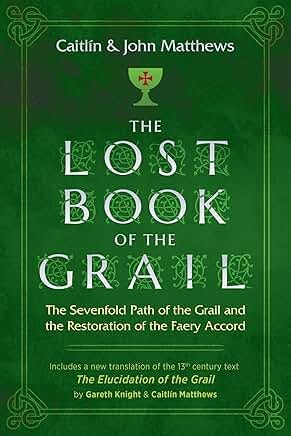
Available from www.Hallowquest.org.com
The second major Grail story which I want to explore is called The Elucidation. It was composed as a prequel to Chretien's poem - though it was written sometime later (around 1225) and in fact has little or nothing to do with the earlier work. The story it tells is remarkable, and adds significantly to our understanding of the Wounded King. After a prologue in which we are told that the Grail is a secret which should not be spoken of openly, it begins by mentioning 'the rich country of Logres' (a name often applied to Arthur's Britain) ' whereof was much talk in days of yore', and how in that time: 'The kingdom turned to loss, the land was dead and desert until it was scarce worth a couple of hazel-nuts. For they lost the voices of the wells and of the damsels that where therein.'
These damsels, we learn, offered hospitality of a rare and special kind, that included not only food, drink and rest, but also spiritual sustenance. Weary travellers would go out of their way to visit them; and to all the damsels would come, ' bearing ... a cup of gold [and] with larded meats, pasties and bread, while another damsel bore a white napkin and a dish of gold wherein was the [food which had been ] asked for ... The damsels with one accord served fair and joyously all wayfarers by the roads that came to the wells..."
Thus all is well in the land of Logres, but a threat looms large, in the form of an 'evil and craven hearted' king named Amangons, 'whose duty it was to protect the damsels and to maintain and guard them with his peace' but who was, in fact, 'the first to break the custom [of the Wells]'. Desiring greatly one particular damsel, Amangons raped her, stealing her golden cup which he afterwards drank from every day.
Following Amangons’ example, his followers did as he had, raping the rest of the Damsels and carrying off their golden cups. It is for this reason, and no other, says the story-teller, that the land fell into ruin and the damsels were seen no more. For, as the text tells us:
"In such sort was the kingdom laid waste that thenceforth was no tree leafy. The meadows and the flowers were dried up and the waters were shrunken, nor [from then onward] might no man find the Court of the Rich Fisherman that was wont to make in the land a glittering glory of gold and silver, of ermines and miner, or rich palls of sendell, of meats and of stuffs, of falcons gentle and merlins and tercels and sparrow-hawks and falcons peregrine." (ibid.)